When people think about bone health, they often think about osteoporosis later in life. But the truth is: bone mineral density (BMD) is not static. It follows a predictable life-course trajectory, and what we do across decades matters. Bone health is not simply something to worry about “when you’re older.” It is a lifelong adaptation process influenced by loading, hormones, and consistency.
In females, bone mineral density increases rapidly throughout childhood and adolescence. This is driven by growth hormone and rising estrogen levels, helping bones become stronger and denser during key developmental years.
By around 18 years of age, most women have achieved approximately 90–95% of their peak bone mass, with peak bone density typically reached in the mid-20s to early 30s, once skeletal maturity is complete.
From there, the picture changes.
After peak bone mass is reached, bone remodelling gradually shifts. Bone is constantly being broken down and rebuilt, but over time, bone resorption slowly begins to outpace bone formation. Through the 30s and early 40s, this decline is usually subtle and gradual.
The most significant change occurs during perimenopause and menopause. Perimenopause, which may begin from the mid-30s through to the 50s, is characterised by fluctuating estrogen levels. These hormonal changes already begin to affect bone turnover. Around menopause (average age 50–51 years), the drop in estrogen accelerates bone loss significantly, with rates estimated at approximately 2-4% per year during the early post-menopausal period. This is where exercise becomes incredibly important.
Strength Training and Bone Health: Why It Matters
Bones respond to load.
Just like muscles adapt to challenge, bones adapt to the forces placed upon them. Weight-bearing and resistance-based exercise send signals to bone tissue that encourage maintenance and strengthening. Research consistently shows that strength and resistance training can:
- Contribute to a slightly higher peak bone mass earlier in life
- Slow age-related bone loss
- Attenuate the rapid decline seen during and after menopause
- Help preserve bone strength and function into older age
Importantly, exercise doesn’t stop ageing, but it can meaningfully change the trajectory.
The gap between “trained” and “untrained” women tends to widen over time. Not because exercise prevents ageing, but because it raises the ceiling early and slows the fall later.
In other words:
Peak higher. Decline slower. Age stronger.
Introducing ‘Ladies Who Lift’ in our on site gym.
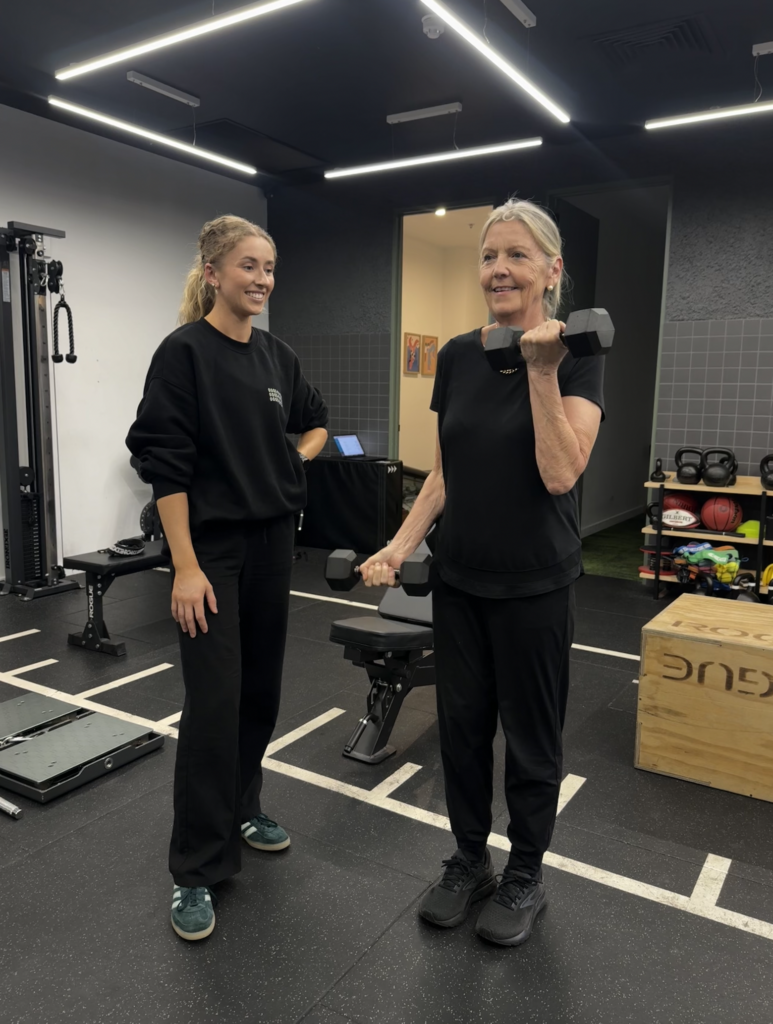
Ladies Who Lift is a small-group physiotherapist-led strength training program designed specifically for women wanting to improve strength, confidence, and markers of long-term health, including bone health.
Across a structured 10-week weights and resistance training program, participants complete objective strength testing using technology to track progress and performance over time.
This includes measurable testing markers to help women understand their baseline, monitor improvements, and build strength safely and progressively in a supportive environment.
The program focuses on:
- Progressive resistance training
- Building confidence with weights
- Improving muscle strength and function
- Supporting healthy ageing and bone mineral density
- Small group support and individualised guidance from a physiotherapist
Whether you’re in your 30s looking to build a stronger foundation, navigating perimenopause, or wanting to preserve strength into later decades, resistance training can play an important role in supporting long-term health.
Because bone health is not just a conversation for later life.
It’s a lifelong investment.