Dizziness is one of the most common but also one of the most misunderstood symptoms people experience. It can feel like light-headedness, unsteadiness, motion sickness or, in some cases, true vertigo, where the room feels like it is spinning.
What many people don’t realise is that dizziness is a symptom, not a diagnosis. And one of the most frequent causes is a problem with the inner ear balance system – the vestibular system.
This is where vestibular physiotherapy comes in.
What Is the Vestibular System?
Your vestibular system sits deep inside the inner ear. It works like a balance sensor, constantly sending information to your brain about your head movement, body position and where you are in space.
When this system isn’t working properly, the brain receives mismatched or incomplete information, leading to:
- Dizziness
- Vertigo (spinning sensation)
- Nausea
- Imbalance or unsteadiness
- Difficulty concentrating
- Sensitivity to head movements
These symptoms can feel unsettling, but the good news is that many vestibular conditions respond extremely well to physiotherapy.
Common Causes of Dizziness and Vertigo
As vestibular physiotherapists, our role is to determine whether your dizziness is coming from the inner ear (peripheral) or the brain/brainstem (central) – because treatment differs significantly.
In some cases dizziness can be a symptom of other system complications. Your physiotherapist will be able to identify flags for this and can appropriately refer on as needed.
Peripheral vs Central Dizziness
Peripheral (Common)
These conditions occur in the inner ear or vestibular nerve and are the most common reason people seek treatment. Examples include:
- BPPV (Benign Paroxysmal Positional Vertigo)
- Vestibular neuritis
- Meniere’s disease
- Acoustic neuroma
Peripheral dizziness responds very well to physiotherapy.
Central (Less Common)
Central causes come from the brain. Examples include:
- Stroke/TIA
- Multiple sclerosis
- Vestibular migraine
- Some neurological conditions
If central signs appear, we collaborate with your GP, neurologist or ENT – but physio still plays a role in helping reduce symptoms and improve balance.
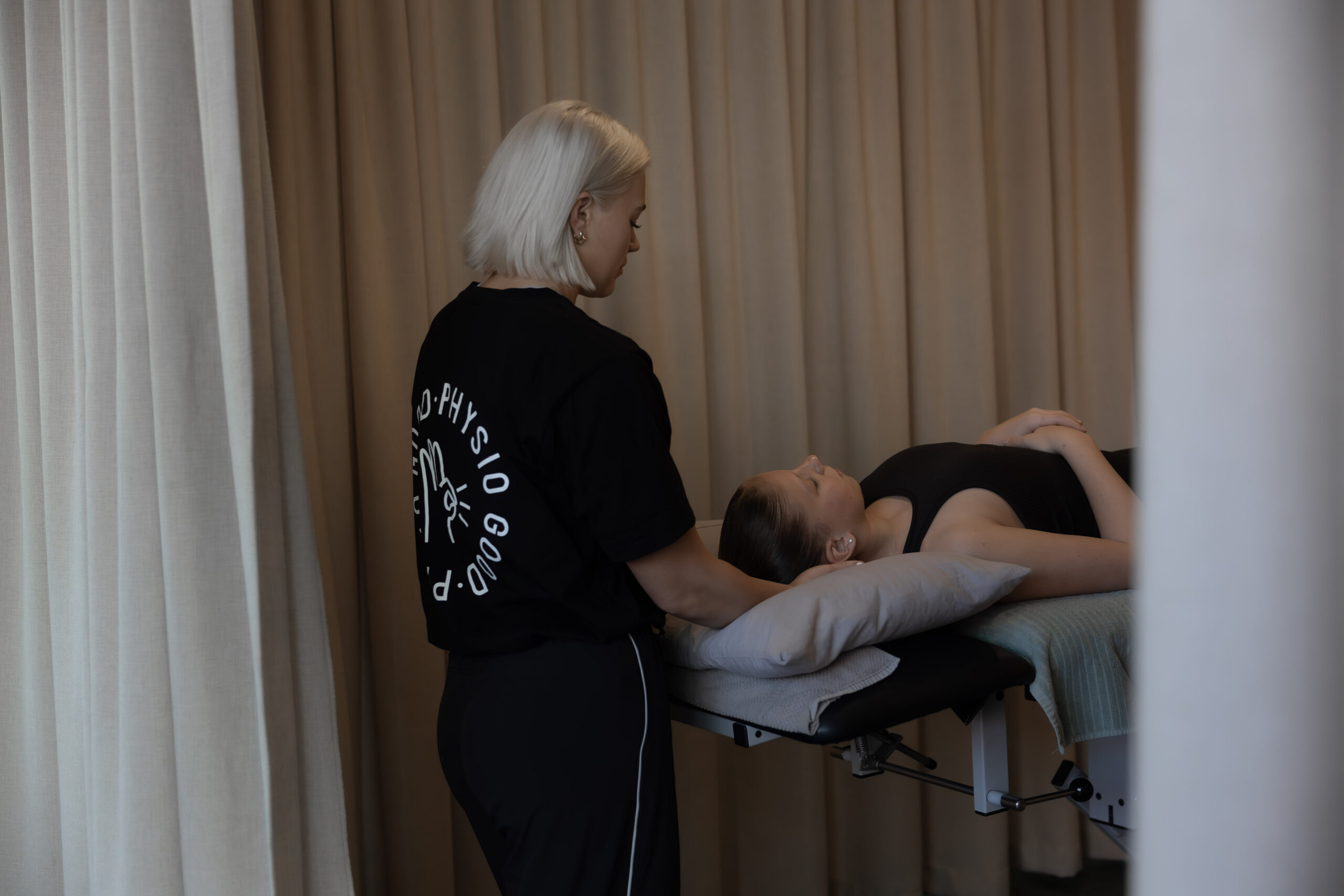
Assessment: How We Test the Vestibular System
A thorough vestibular assessment includes:
- Oculomotor Screen
We examine how your eyes move and stabilise, including:
– Smooth pursuit (tracking)
– Saccades (quick eye movements)
– VOR cancellation
– Gaze stability
– Checking for nystagmus, an involuntary eye movement that helps reveal the source of dizziness
- Balance & Gait Assessment
Your posture, gait pattern, and balance strategies also provide clues about which part of the vestibular system is affected.
These tests help us determine whether symptoms are coming from vestibular hypofunction (reduced function of the inner ear), BPPV, or another cause.
BPPV: The Most Common Cause of Vertigo
Benign Paroxysmal Positional Vertigo (BPPV) affects up to 2.4% of people during their lifetime and often appears suddenly – commonly noticed when rolling over in bed or getting up in the morning.
Symptoms include:
- Spinning sensations
- Nausea
- Imbalance
- Difficulty looking up or rolling over
BPPV occurs when tiny calcium crystals (otoconia) in the inner ear become dislodged and move into the wrong area. This confuses the brain and triggers spinning sensations during certain movements.
How We Test for BPPV
- Dix-Hallpike Test (for posterior canal BPPV)
- Roll Test (for horizontal canal BPPV)
These tests recreate symptoms and allow us to observe the specific pattern of nystagmus, which tells us exactly which canal is affected.
Treatment: Epley’s Manoeuvre
The most effective treatment for BPPV is the Epley Manoeuvre, which repositions the crystals back where they belong.
Success rates range from 67–97%, often resolving vertigo in 1–2 sessions.
Patients are often relieved to learn that vertigo can be treated so quickly.
Vestibular Hypofunction: When the System Is Underperforming
Vestibular hypofunction occurs when one or both inner ears aren’t sending accurate signals to the brain. This may follow:
- Vestibular neuritis
- Ear infections
- Aging
- Sensory mismatch
- Concussion
- Cervical (neck) issues
Symptoms Include:
- Dizziness with head movement
- Blurred vision when turning the head
- Unsteadiness
- Motion sensitivity
Treatment Includes:
- Gaze stabilisation exercises (improve VOR function)
- Habituation exercises (reduce motion sensitivity)
- Balance training
- Cervical treatment when neck involvement is contributing to dizziness
These exercises help retrain the brain and restore normal function.
How Vestibular Physiotherapy Helps
Vestibular physio aims to:
- Reduce dizziness & vertigo
- Improve balance and confidence
- Restore normal movement
- Reduce motion sensitivity
- Improve quality of life
Most clients see improvements within a few sessions, especially with BPPV. Hypofunction and more complex conditions often take longer, but progress is steady and measurable.
When to See a Vestibular Physiotherapist
Book an assessment if you are experiencing:
- Spinning episodes
- Dizziness when rolling over in bed
- Vertigo when looking up
- Unexplained imbalance
- Nausea triggered by head movement
- Fogginess or motion sickness
- Dizziness after an infection, injury or travel
Early assessment leads to faster recovery and reduces the risk of recurrent episodes.